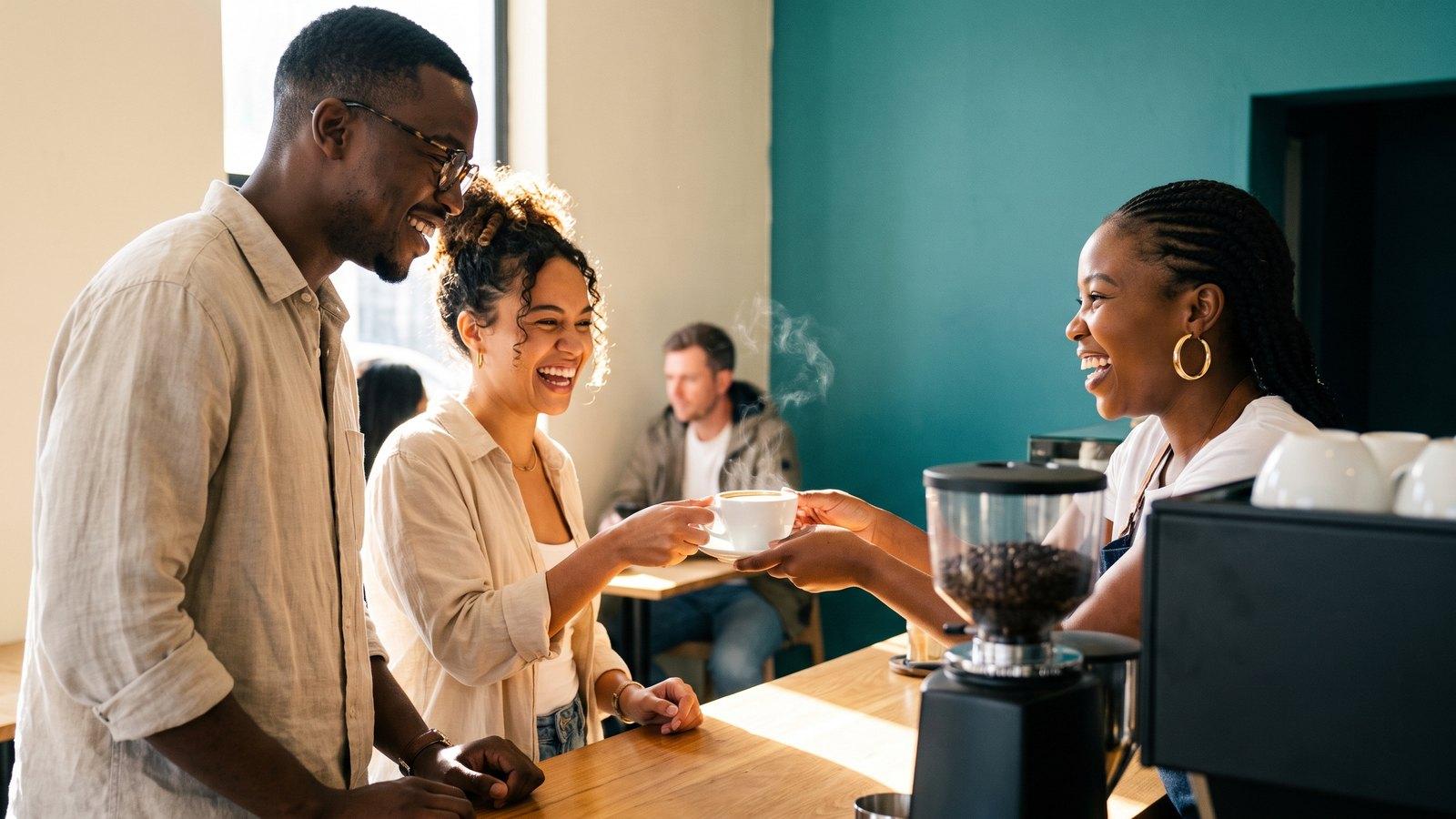
Specialty coffee in South Africa has grown from a Cape Town curiosity into a national scene — more than 70 specialty cafés in Cape Town alone, serious roasters in every major city, and even coffee grown on South African soil. This guide gives you the complete picture: what "specialty" actually means, the real numbers behind the boom, who's roasting the good stuff in every province, and where to start if you're ready to move past the supermarket aisle.
What is specialty coffee — and why is SA's scene different?
Specialty coffee is coffee that scores 80 points or more out of 100 when graded by a certified taster against the Specialty Coffee Association's standards. That grading is a real event, not a marketing line: graders cup every lot — slurping spoonfuls off a long table, scoring aroma, sweetness, acidity, body and defects — and only the lots that clear 80 earn the name. Behind the score sits a chain of care: beans from a known farm or washing station, picked ripe, processed properly, roasted fresh in small batches.
That's the international definition. The South African version comes with a twist we're quite proud of: our scene is noticeably allergic to snobbery. Maybe it's because most of us grew up on instant — there's no old-money espresso tradition here to gatekeep. The best SA roasters will happily talk you through a Burundi natural without once making you feel small for asking what "natural" means. Walk into Deluxe Coffeeworks in Cape Town or Father Coffee in Joburg and you'll find serious coffee served with zero ceremony.
The other thing that makes SA different: we're one of the few specialty scenes in the world that can point at coffee trees growing in its own backyard. More on that below — it's a story almost nobody tells.
The South African coffee market in numbers
The honest headline: South Africa is still an instant-coffee country — but the specialty slice is growing fast, and the numbers back it up.
- An estimated 76% of South African coffee drinkers prefer instant coffee, according to Perfect Daily Grind's March 2026 breakdown of the SA specialty market.
- Up to two-thirds of South African adults drink coffee daily, per the same report. That's an enormous base of daily drinkers, most of whom haven't yet tasted what a freshly roasted bean can do.
- Cape Town alone has more than 70 specialty cafés — which is why so many "best coffee in South Africa" lists never leave the Mother City. (They should. Keep reading.)
- South Africa produced roughly 1,800 tonnes of green coffee in 1987; today only about 200 hectares remain under cultivation, per the same Perfect Daily Grind report.
Dario Scilipoti, founder and head roaster at Bluebird Coffee Roastery in Howick, put the trajectory plainly in that same report:
"We are moving in the right direction. I'd say we're probably five years behind the US and Europe."
Read those numbers together and you get the real story: a country of committed daily coffee drinkers, three in four of them still on instant, with a small but serious specialty movement doing the convincing one cup at a time. That's not a mature market — that's a market at the start of its curve.
From instant to intentional: a short history
For most of the twentieth century, South African coffee meant a tin of Ricoffy or Frisco next to the kettle and a splash of condensed milk if you were feeling fancy. Chicory blends, "coffee creamers", moerkoffie on the farm — it was a culture of convenience, and honestly, it did the job. Chris Rootman, chairman of the Specialty Coffee Association of Southern Africa (SCASA) and sales manager at TriBeCa Coffee, describes that heritage well:
"There are many stories of people sitting around fires in the early mornings drinking what the locals call 'moerkoffie' or 'boskoffie'."
The turn came in the mid-2000s. In 2005, Bean There Coffee Company opened in Johannesburg as South Africa's first roaster of Fairtrade-certified coffee, built on direct, ethical relationships with African producers — Ethiopia, Kenya, Rwanda, the DRC. Soon after, Origin Coffee Roasting opened in a working warehouse in De Waterkant, Cape Town, and made training baristas as much of the mission as roasting — its barista academy is still running today. Those two roasteries — one in Joburg, one in Cape Town, both still roasting — are the closest thing SA specialty has to a founding moment.
Then the 2010s happened. It was in the 2010s, when the hipster trend was in full flow in SA and artisanal everything was all the rage, that I got pulled in myself. A close friend who is passionate about coffee introduced me to grinding beans and weighing out brew ratios. I remember the feeling clearly: I felt like I'd been duped into thinking that stale supermarket ground coffee was the real deal. One properly brewed cup of freshly roasted single origin and there was no going back.
The real dupe isn't instant coffee — it's stale supermarket pre-ground sold as "premium". Instant is honest about what it is.
That decade gave us Truth's steampunk temple on Buitenkant Street, Father Coffee in Braamfontein, Rosetta on Bree Street, and a wave of roasteries in cities the listicles never visit. By 2020, specialty coffee wasn't a Cape Town curiosity anymore. It was national.
Is coffee actually grown in South Africa?
Yes — and this is the part of the story almost every international coffee writer misses. South Africa isn't just a consuming country; we grow arabica on our own soil, on a small but genuinely remarkable scale.
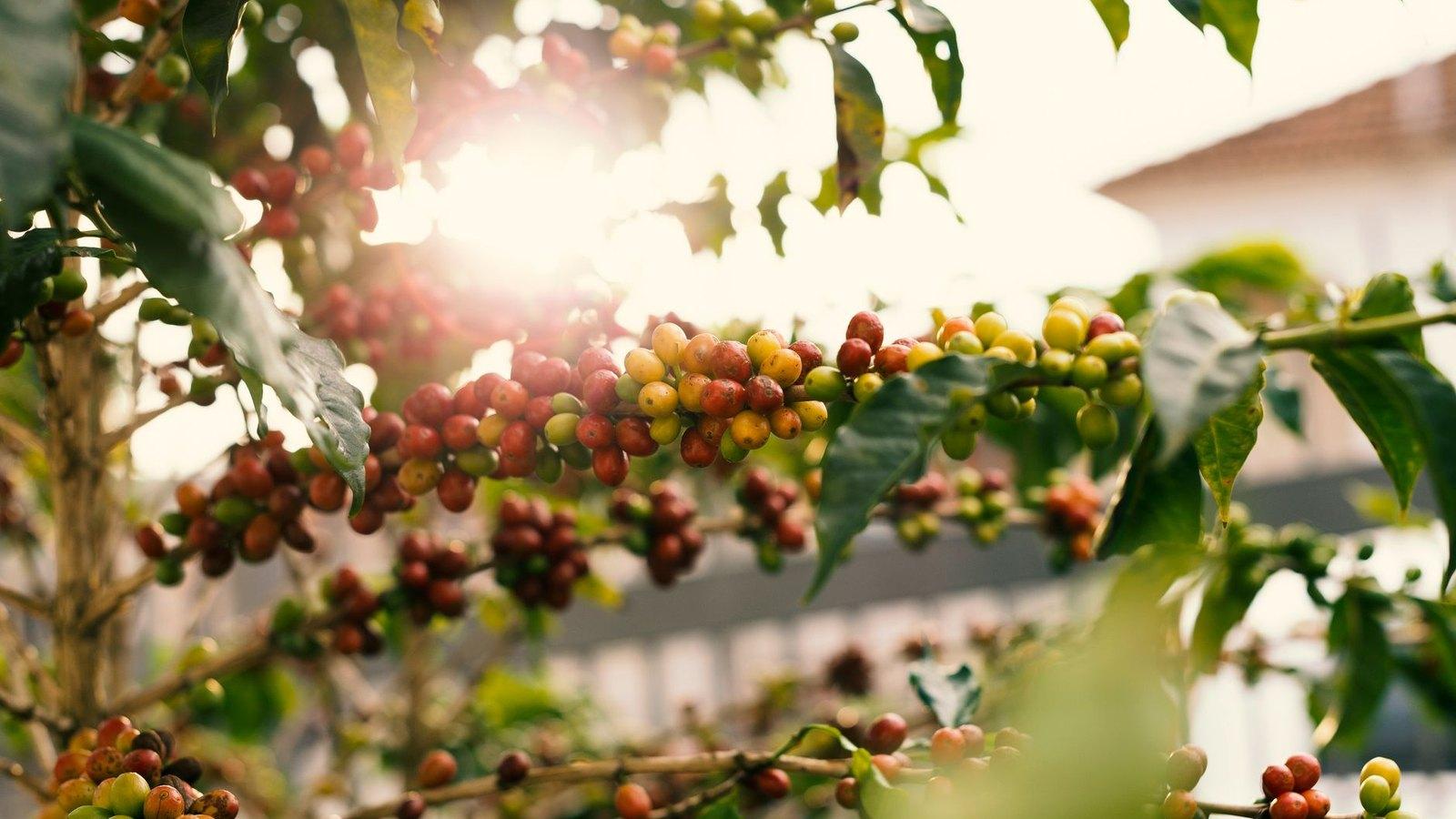
The flagbearer is Beaver Creek Coffee Estate in Port Edward, on the KwaZulu-Natal south coast — the world's southernmost coffee-growing plantation, by the estate's own reckoning. They grow three arabica varietals — SL28, Catuai and F6, with SL28 being the same celebrated cultivar behind Kenya's most famous cups — and run a daily crop-to-cup tour where you can walk from the trees to the roastery to a flat white in one morning. There aren't many places on Earth where you can do that outside the tropics.
Up in Mpumalanga, Sabie Valley Coffee grows and roasts arabica near White River, keeping a lowveld coffee-farming tradition alive on the other end of the country.
The wider context makes these farms more remarkable, not less. South Africa produced around 1,800 tonnes of green coffee back in 1987; today roughly 200 hectares remain under coffee nationally. Labour costs and sugarcane economics pushed most farmers out. The handful who stayed aren't competing with Brazil on volume — they're offering something rarer: single-estate African coffee you can visit on a weekend drive from Durban.
The best specialty roasters in South Africa, province by province
Every roaster below has a full profile in our directory — bean details, tasting notes, locations, the lot. This is the national map; the profiles carry the depth.
Western Cape
- Truth Coffee Roasting (Cape Town) — the steampunk showpiece on Buitenkant Street, and still the most theatrical cup of coffee in the country.
- Origin Coffee Roasting (De Waterkant) — the mid-2000s pioneer, still roasting with quiet authority from its warehouse.
- Rosetta Roastery (Cape Town) — precise, understated single origins for people who want the bean to do the talking.
- Deluxe Coffeeworks (Cape Town) — rock 'n roll energy and the most reliably excellent flat white in the city.
- Tribe Coffee Roasting (Woodstock) — a working roastery-café where the machines share the room with your breakfast.
- Yellow Jacket Coffee Roaster (Kenilworth) — small-batch roasting that gives the southern suburbs a roaster to call their own.
- Cedar Coffee Roasters (Woodstock) — founded in 2021 at Side Street Studios by Winston Thomas, a three-time SA Barista Champion, and Leigh Wentzel, who spent seven years at Rosetta.
- Terbodore Coffee Roasters (Franschhoek) — the Great Dane on the label, a farm-style roastery in the winelands worth the drive alone.
- Legado Coffee Roasters (Stellenbosch) — roasting light and nuanced at the Woodmill since 2010, on one of South Africa's original Diedrich machines.
Gauteng
- Father Coffee (Johannesburg) — Joburg's benchmark for elegant, fruit-forward roasting; the citrus and stone-fruit notes on their bags are earned, not marketing.
- Bean There Coffee Company (Johannesburg) — SA's first Fairtrade roaster and still the standard-bearer for Africa-only single origins.
- Craft Coffee (Johannesburg) — a compact Parktown North roastery that grew out of an office-coffee business and kept the roasting small on purpose.
- Motherland Coffee Company (Rosebank) — African-origin only since the first café opened in 2010: Ethiopia, Rwanda, Burundi and the DRC, bought fair from co-ops, with the Rwandan Musasa + Ethiopian Sidamo Original Blend still the one to order.
- Sorcery Coffee Roasters (Pretoria) — Pretoria's standout, roasting from the ruins of an old Wapadrand farm, with chocolate-and-caramel comfort and floral surprises.
- TriBeCa Coffee Company (Centurion) — one of the country's most capable roasting operations, supplying serious cafés nationwide.
- Royal Coffee Roasters (Alberton) — an East Rand stalwart proving good roasting doesn't need a trendy postcode.
KwaZulu-Natal
Five roasters strong, and completely ignored by every national "best of" list. Their loss.
- Humble Coffee (Durban) — the name is the philosophy: superb coffee, zero attitude.
- Lineage Coffee (Hillcrest) — a Durban original with deep roots in the KZN coffee community.
- Now Coffee (Umhlanga) — sleek, modern roasting for Durban's north coast.
- Bluebird Coffee Roastery (Howick) — a Midlands gem that makes a strong case for buying beans where the air is cooler.
- Beaver Creek Coffee Estate (Port Edward) — the only roaster on this list that grew the coffee too.
Mpumalanga
- Sabie Valley Coffee (White River) — lowveld-grown, lowveld-roasted, and unlike anything else in the directory.
So which South African coffee is the best?
Fair question, and we're not going to hide behind "they're all great". They're all in the directory because they're good — but "best" depends on what you're actually after. Here's our honest read:
- Best for the experience: Truth Coffee Roasting, Buitenkant Street, Cape Town. The steampunk fit-out, the theatre, the espresso — no coffee outing in SA touches it. Take every visitor you ever host.
- Best everyday single origin: Rosetta Roastery. If you want to actually taste the difference between a washed Ethiopian and a natural Burundian, Rosetta's range is the cleanest classroom in the country.
- Best for milk drinks: Deluxe Coffeeworks. Their blends are built for flat whites and cappuccinos, and the consistency across their bars is remarkable.
- Best ethical story: Bean There Coffee Company — two decades of Fairtrade, direct African sourcing before it was fashionable.
- Best only-in-South-Africa cup: Beaver Creek Coffee Estate. Estate-grown SL28, roasted metres from the trees. Nowhere else comes close to that story.
Ask any South African coffee person for their top three and you'll hear Truth, Rosetta and Origin more often than not — and we'd broadly agree they belong up there. But the pack behind them is deep, and the right answer for your kitchen might be a roaster twenty minutes from your house. That's exactly the point of this site.
Brew it properly at home
The fastest upgrade to your daily cup isn't a new machine — it's fresh beans, ground just before brewing. Remember the 15-15-15 rule: green coffee keeps for about 15 months, roasted beans peak within about 15 days, and ground coffee starts fading within 15 minutes. Buy fresh, grind fresh, and even a humble plunger will embarrass most café chains.
From there, pick your path. Start with how to choose your first specialty coffee, then match the method to your kitchen: the coffee plunger for easy weekend brewing, the moka pot for strong stovetop cups, pour over for clarity and ritual, or the AeroPress for the best travel coffee ever designed. And if you're not sure which roast to buy first, our light vs dark roast guide settles it.
Then buy South African. Every roaster in this guide has a profile in our roasters directory — find one in your province, order a fresh bag, and taste what three in four coffee drinkers here are still missing. Everyone starts somewhere. This is a lekker place to start.