
A moka pot is a stovetop coffee maker that uses steam pressure to push hot water up through ground coffee, making a strong, espresso-style cup — no machine, no barista skills. Get three things right and it's some of the best-value coffee you can make at home: a medium-fine grind, a roughly 1:10 coffee-to-water ratio, and gentle, low heat. Get them wrong and you get the bitter, metallic brew that gives moka pots a bad name.
I brew on a 2-cup stainless steel Bialetti Venus on an electric stove most mornings, and I'll be honest: my first few cups were rough. Bitter, a bit metallic, the kind of coffee you finish out of stubbornness rather than pleasure. One small change fixed it. First, the basics — because once you understand what's actually happening inside the pot, the good coffee follows.
What is a moka pot, and what kind of coffee does it make?
A moka pot is a stovetop coffee maker that pushes hot water up through a bed of ground coffee using steam pressure. It makes a small, intense, concentrated cup — closer to espresso than to drip or filter coffee, but not quite true espresso. Think of it as the home cook's espresso: bold, syrupy, and built for milk if you want it.
The pot has three parts that screw together. The bottom chamber holds water. A funnel-shaped basket in the middle holds the ground coffee. The top chamber is where the finished coffee collects. As the water in the base heats up, pressure builds and forces it up through the coffee and into the top. That gurgle you eventually hear is the last of the water turning to steam and chasing through — your signal that the brew is done.
It does notmake "regular" filter-style coffee on its own, because the result is far stronger and more concentrated than a drip machine produces. But you can absolutely turn it into a regular-strength cup: pull a moka pot shot and top it up with hot water for an Americano-style long black, or add steamed or warm milk for a flat-white-ish drink. The concentrate is the base; what you do next is up to you.
Invented by Alfonso Bialetti in Italy in 1933, the moka pot became the everyday espresso of millions of households long before home machines existed. The classic octagonal Bialetti Moka Express is the design you've seen in a hundred kitchens. It still works the same way it did more than ninety years ago.
What you need: pot, grind, beans, ratio
Most guides skip the actual numbers. Here they are, because the numbers are the whole game.
The pot.A 2-cup or 3-cup is the sweet spot for one or two drinkers. Note that "cups" here means tiny espresso-sized cups, not mugs — a "6-cup" moka pot makes roughly 300ml of concentrate, not six mugs. Buy for how much you actually drink. An under-filled moka pot brews unevenly, so it's better to have a small pot you fill properly than a big one you run half-empty.
The grind.Medium-fine, with a texture like table salt. That's the single most useful description I can give you. It's finer than what you'd use in a French press (see how to use a coffee plunger for that coarser end of the scale) but coarser than true espresso powder. Too fine and you choke the pot, building dangerous pressure and a burnt, bitter cup. Too coarse and the water rushes through weak and sour.
The beans. Medium to medium-dark roast, lower acidity, chocolatey and nutty rather than bright and fruity. More on why further down — the roast choice matters more here than with almost any other method.
The ratio. Aim for roughly 1:10 coffee to water— about 1g of coffee for every 10g of water. In practice, you fill the water chamber to just below the safety valve, fill the coffee basket level and full (don't tamp it — moka coffee should sit loose), and you'll land close to 1:10 without weighing anything. If you do weigh, a 3-cup pot takes roughly 17g of coffee to about 170ml of water. Once it works, write your numbers down and repeat them.
| Variable | Target | Quick feel |
|---|---|---|
| Grind | Medium-fine | Table salt |
| Ratio | ~1:10 coffee to water | Basket level-full, water below the valve |
| Roast | Medium to medium-dark | Chocolatey, nutty, low acidity |
| Heat | Low | Patient, not rushed |
| Total brew | ~6 minutes | Off the heat at the first gurgle |
How to make moka pot coffee, step by step
Here's the method that turned my mornings around. The big move is in step one.
1. Boil your water first. Fill the bottom chamber with hot, just-boiled water, up to just below the safety valve. Use a kettle. This is the part most people get wrong, and it's the difference between a clean cup and a bitter one.
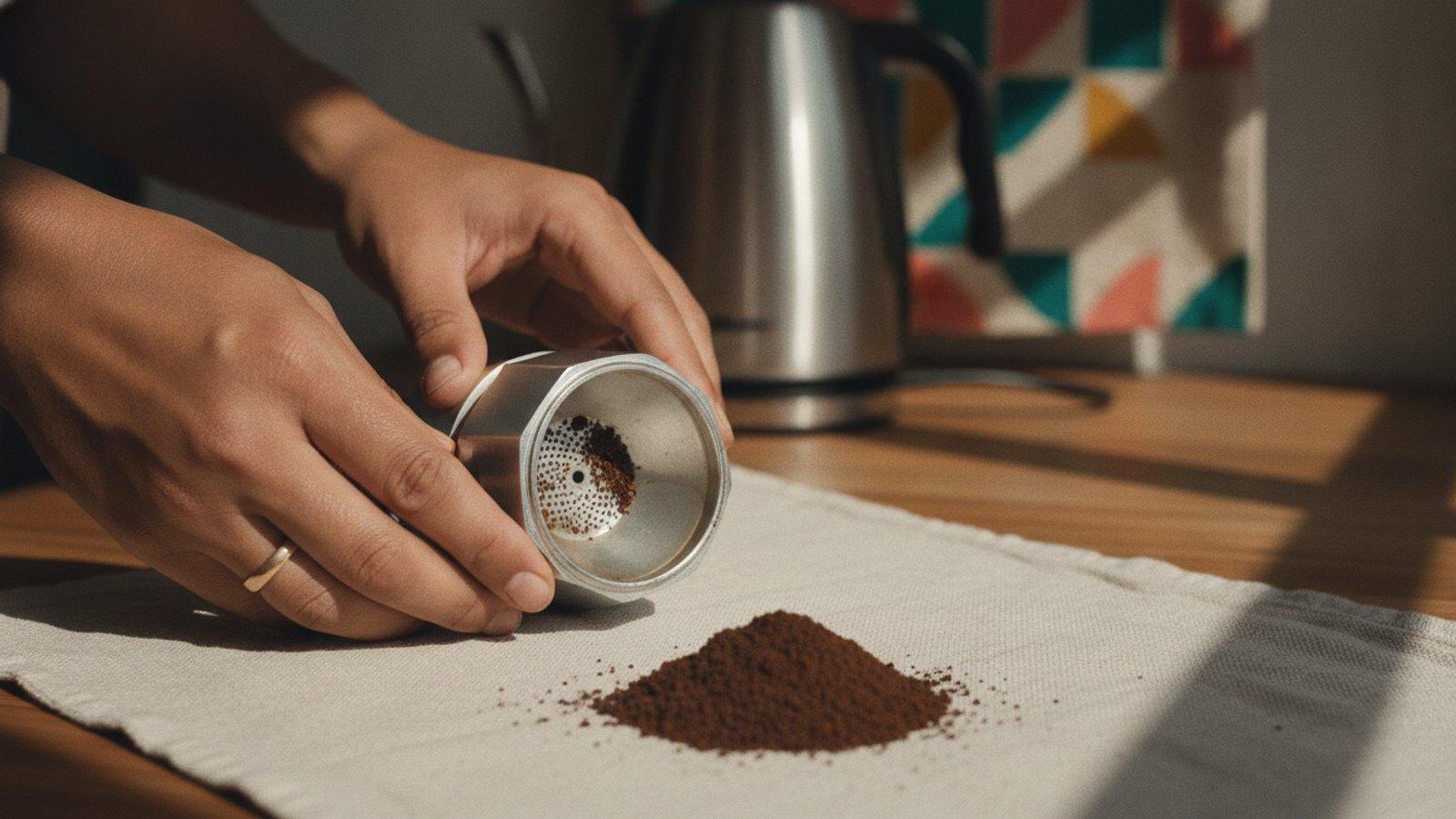
2. Fill the basket. Add your medium-fine grounds to the funnel basket, fill it level and full, and give it a gentle tap to settle — but do not tamp or press it down. Brush any stray grounds off the rim so the seal is clean.
3. Assemble carefully.Screw the top onto the base. The base will be hot now, so use a cloth or oven glove. Tighten firmly but you don't need to wrestle it.
4. Low heat, lid up. Put it on a low flame — gas, electric or induction (induction needs the right pot, more on that below). Keep the lid open so you can watch. Low heat is non-negotiable; high heat scorches the coffee on its way up.
5. Watch for the rise.After a couple of minutes the coffee will start streaming up into the top chamber. You want a slow, steady, honey-coloured flow, not a violent spurt. If it's spluttering aggressively, your heat's too high — turn it down.
6. Pull it at the gurgle. The moment the flow turns pale and you hear that hissing, sputtering gurgle, take the pot off the heat immediately. That sound is steam, and steam left on the grounds is exactly what makes moka coffee taste burnt.
7. Stop the extraction. Run cold tap water over the base for a few seconds to cool it and halt any residual brewing. Give the top a quick stir to even out the strength, then pour.
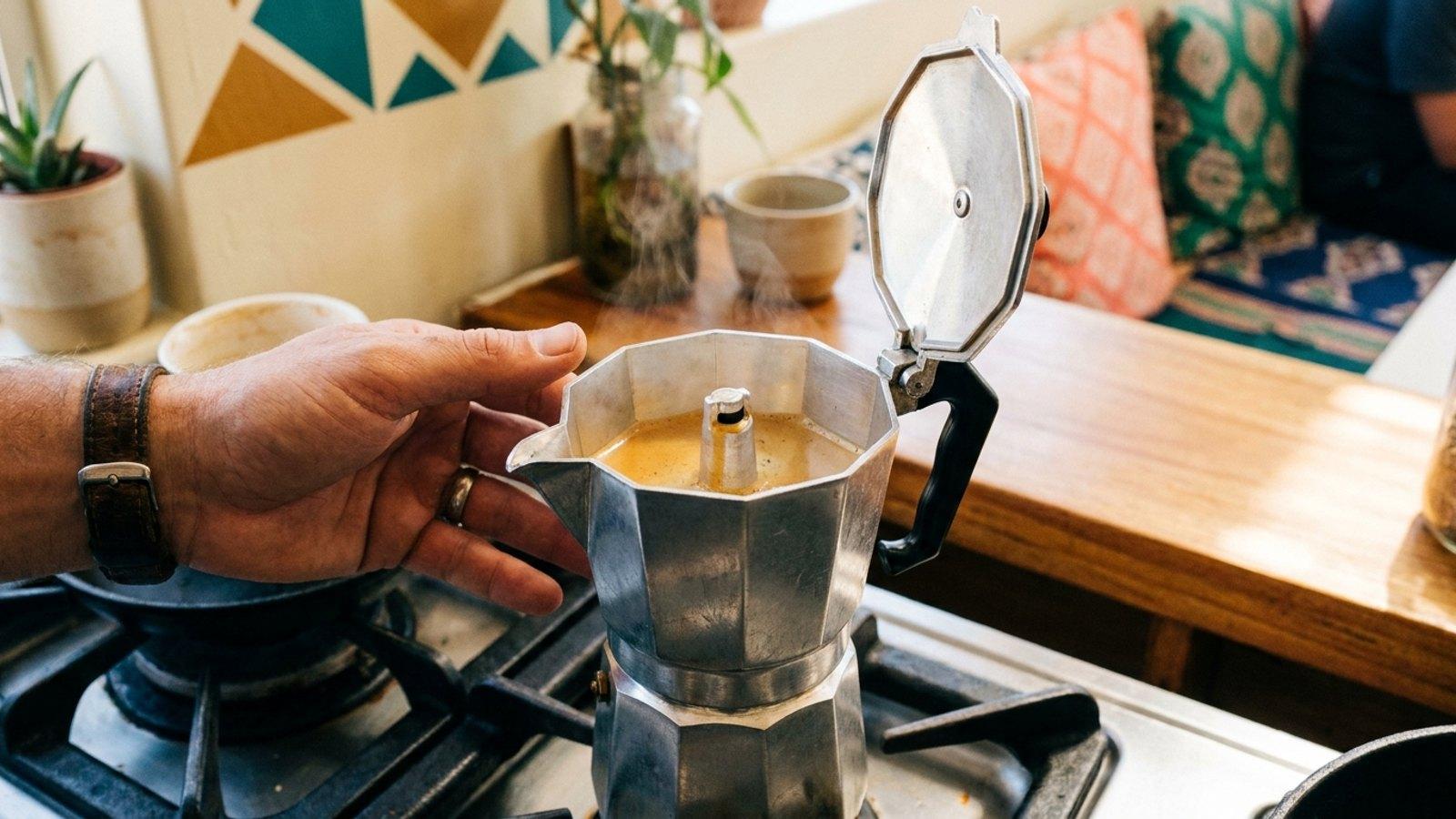
Start to finish, a good moka brew runs about 6 minutes on low heat. If yours is done in two, your heat's too high; if it's dragging past eight, it's too low. Adjust and you'll dial it in within a few tries.
The mistakes that make moka pot coffee bitter
Almost every bitter moka pot cup comes down to one of two things: too much heat, or too much time on that heat. And here's where my own story matters, because I made the textbook mistake.
I once started a brew with cold waterin the base. Seems harmless. It isn't. With cold water, the pot has to sit on the burner far longer to build enough pressure — and all that extra time means the coffee basket and the metal around it are roasting away while you wait. By the time the coffee finally came up, it had been scorched by the prolonged heat. The result was bitter and faintly metallic, the exact taste people complain about when they swear off moka pots forever.
The fix was almost embarrassingly simple, and it's worth saying plainly:
Start with hot, just-boiled water — not cold.It's the single biggest fix for bitter moka pot coffee, and almost no South African guide tells you to do it.
This isn't my invention. The coffee educator and YouTuber James Hoffmann popularised the just-boiled-water start precisely to cut the time the grounds spend cooking, and it's become standard advice among people who take the method seriously. Hot water means the pot spends far less time on the burner. Less time on the burner means the coffee comes up fast and clean, before the heat can scorch it. Once I switched, the metallic edge vanished and the cup got noticeably sweeter — same beans, same pot, same stove.
The other common culprits, quickly:
- Heat too high. Forces the coffee up in a violent rush and burns it. Keep it low.
- Grind too fine. Chokes the flow, builds excess pressure, over-extracts. Back off to table-salt texture.
- Leaving it on past the gurgle. That last steamy phase is pure bitterness. Pull it the second you hear it.
- Stale, dark, oily supermarket beans. Old coffee tastes bitter no matter how well you brew. Buy fresh, roasted recently.
Are there downsides to a moka pot?
Yes, and an honest guide should say so. The moka pot is brilliant value, but it asks something of you in return.
The main downside is that it's less forgiving than it looks. It rewards attention — the right grind, low heat, pulling it at the gurgle — and punishes a "set it and walk away" approach with bitterness. A French press or a drip machine will tolerate a lazy morning; a moka pot, less so. You learn its rhythm, but there is a learning curve.
It's also not true espresso. It can't hit the 9 bars of pressure a proper espresso machine makes, so you won't get a thick, lasting crema or quite the same intensity. For most home drinkers that's a non-issue — the coffee is excellent in its own right — but if you bought one expecting café-grade espresso shots, know what you're getting.
Two smaller things. The traditional aluminium models need a quick rinse-and-dry rather than a soak, and you shouldn't scrub the inside with soap (the seasoning matters). And a moka pot makes a fixed amount — you can't easily brew "just half" — so match the pot size to your habits.
None of this is a dealbreaker. It's just the trade for getting strong, near-espresso coffee from a R800 pot instead of an R8,000 machine.
Where to buy a moka pot in South Africa
Moka pots are easy to find locally, and you don't need to import anything. The standard reference is Bialetti, the original Italian maker, and its pots are stocked widely.
The classic aluminium Bialetti Moka Express runs around R799 at Yuppiechef, with similar pricing on Takealot. Checkers and other larger grocery and homeware retailers carry moka pots too, often including cheaper unbranded versions if you want to test the method before committing.
One buying decision matters more than price: induction compatibility. The classic aluminium Moka Express does notwork on an induction hob — aluminium isn't magnetic, so an induction stove simply won't heat it. If you have induction, you need the stainless steel Bialetti Venus(the model I use), which is induction-ready and also a little sturdier for daily use. On gas or a standard electric plate, either model is fine. Check the base of any pot for an "induction" mark before you buy if your kitchen runs induction.
Quick rule: gas or electric, the aluminium Moka Express is the cheap classic. Induction, go stainless Venus.
Which South African beans suit a moka pot
The roast you choose matters more with a moka pot than with almost any other brewer. Aim for a medium to medium-dark roast with lower acidity and chocolatey, nutty, caramel-leaning notes rather than a bright, fruity light roast.
Here's why. The moka pot brews hot and under pressure, against a lot of metal. That combination amplifies acidity and sharp, bright flavours — the very things a light, fruity Ethiopian filter roast is celebrated for. Run that bean through a moka pot and the lovely florals can tip into sourness or a thin, jarring acidity. A medium or medium-dark roast, with its rounder, sweeter, chocolate-and-nut character, takes the pressure-and-heat treatment and turns it into something rich and balanced. The method flatters body and sweetness; it punishes delicacy.
So when you're shopping, read the roaster's tasting notes and reach for words like chocolate, caramel, nuts, dark sugar, low acidity — and skip, for this brewer, the bright citrus, floral, berry light roasts (save those for a pour over). If you're new to reading bean bags, choosing your first bag of specialty coffee walks through what the labels actually mean.
The good news is that South Africa has no shortage of roasters making exactly this style. You can browse South African roasters on our directory and filter for medium roasts — most roasters offer a chocolatey medium or a versatile espresso blend, and those are your moka pot beans. Buy a small bag, brew it the way above, and adjust your grind one notch at a time until the cup sings.
That's the whole craft, really: good fresh beans in the right roast, ground like table salt, brewed gently from hot water, and pulled at the gurgle. Get a pot, get a bag, and give it a week of mornings. By cup five or six you'll have it dialled — and you'll wonder why anyone puts up with instant.