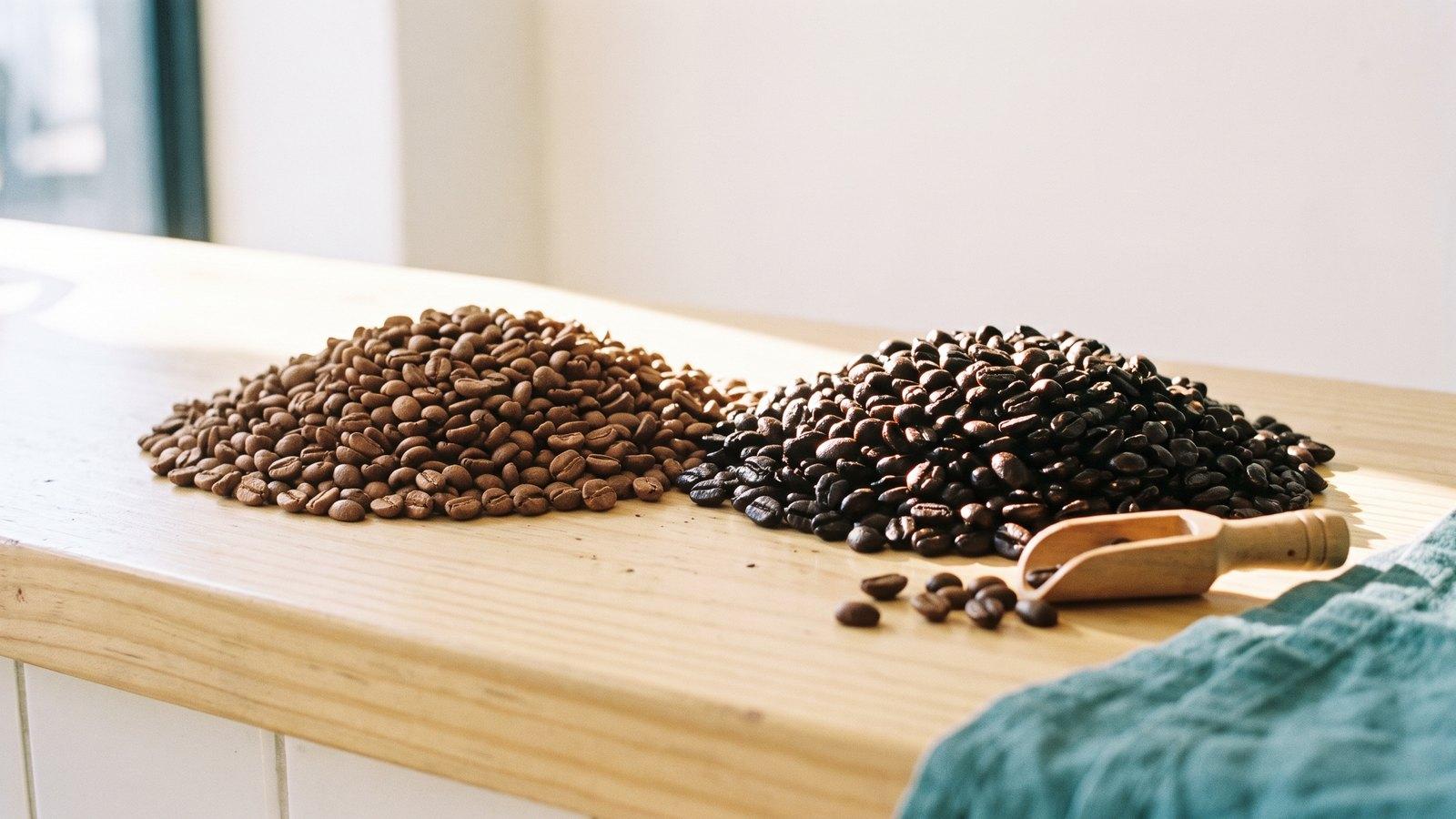
"Is dark roast stronger?" It's one of the most common questions people ask when they start getting into coffee — and the answer is more nuanced than you'd think. The roast level of your coffee affects everything: flavour, aroma, caffeine content, and even how you should brew it.
What actually happens during roasting
Coffee starts as a green, dense seed. When it's roasted, heat triggers chemical reactions that develop the flavours we associate with coffee. The longer you roast, the more the bean's original characteristics give way to the flavours of the roast itself.
Think of it like toast. Lightly toasted bread still tastes like bread. Heavily toasted bread tastes like... toast. Same idea.
The roast spectrum
- LLight roast
Higher acidity, more origin character. You'll taste fruity, floral, and tea-like notes. The bean's natural personality shines through. Often preferred for single origins.
- MMedium roast
The sweet spot for many drinkers. Balanced acidity and body, with notes of chocolate, caramel, and nuts. Works brilliantly in any brew method.
- DDark roast
Lower acidity, heavier body. Smoky, bittersweet, sometimes charred. The roast flavour dominates. Commonly used in espresso blends and for milk-based drinks.
The caffeine myth
Here's a surprise: dark roast coffee doesn't have more caffeine than light roast. In fact, light roast beans are slightly denser, so if you measure by scoops (volume), light roasts actually pack a tiny bit more caffeine per cup.
The difference is negligible in practice, but it's a useful myth to bust. "Stronger" tasting doesn't mean more caffeine — it just means more roast flavour.
Dark roast tastes bolder, but light roast is where you'll find the most complex and interesting flavours. Neither is better — it's about what you enjoy.
So which should you choose?
If you're new to specialty coffee, start with a medium roast. It'll give you a sense of what quality coffee can taste like without pushing you too far in either direction.
As your palate develops, experiment. Try a light roast from Ethiopia and a dark roast from Brazil. Taste them side by side. You'll quickly learn what you prefer — and that knowledge makes every cup better.